Schools in Punta Cana: what a family at River Island in Bávaro needs to know
For a family moving to Bávaro, or wintering here long enough that children need a classroom, the school question comes before the beach. It has three parts: where the schools are, how the Dominican school year fits around your own, and how to tell what a school's labels actually mean. This guide answers each from River Island, in the Atlántida community of Bávaro, and keeps to what can be checked.
Where the schools are, measured from River Island
Bávaro's schools do not sit in one campus district; they cluster along the roads where its neighbourhoods grew. Measured by road from River Island, three clusters cover most of the choices a family will look at:
- Parque Empresarial Bávaro: about 5 miles, where a school is mapped at the entrance to the business park.
- Verón: about 6 miles to the town, which holds several of the district's schools.
- Bulevar Turístico del Este at Friusa: about 7 miles, where schools line the boulevard.
One warning about maps. When we searched open map data for schools across Bávaro and Verón, it returned only a handful of entries, far fewer than a drive around the area shows. A phone's map app is therefore a poor way to shortlist. Ask other families, ask the schools for their addresses, and drive the route once at school-run time before you decide.
What Dominican law says about schooling
Article 63 of the Dominican Constitution recognises a right to a full, quality education. It has the State guarantee free public education and declares education compulsory at the initial, basic and secondary levels, and it makes the family responsible for its children's education. The organic education law, Ley 66-97, repeats the duty: free education at those levels is owed to everyone living in the country.
In practice that gives families three broad options here: public schools under the Ministry of Education, MINERD, teaching in Spanish; private schools, which follow the national framework with their own fees and programmes; and schools that describe themselves as bilingual or international. Which one suits a child depends far more on language and on how long the family will stay than on the label on the gate.
The school year, laid against an owner's calendar
MINERD's calendar for 2026-2027 started classes in public schools on 24 August 2026; private schools started between 24 and 27 August within their own adjustments, and the students' year ends on 18 June 2027, with 190 teaching days. Private and international schools may set their own dates within that frame, so ask each one for its calendar in writing.
Public holidays shape the weeks. The country has 12 national holidays in 2026 under Law 139-97, and the law moves many of them: one falling on a Tuesday or Wednesday is observed on the Monday before, one on a Thursday or Friday on the Monday after. A few stay fixed, among them 21 January, the day of Our Lady of Altagracia, which matters locally because River Island sits in the municipality of Higüey. For a family planning flights, those Monday holidays create long weekends worth knowing about in advance.
Bilingual, international, accredited: reading the labels
None of these words is regulated in a way that tells you quality on its own. Bilingual usually means a substantial share of teaching in English alongside Spanish. International usually means a foreign curriculum or an outside accreditation. Accredited means a named body has reviewed the school, and that is the one claim you can verify.
So ask three questions in writing. Which body accredits the school, and for which grades? Is the school authorised by MINERD, so that its certificates count in the Dominican Republic? And what does it need from a child arriving from abroad, such as report cards, a birth certificate and translations? Then check the answer to the first question on the accrediting body's own online directory, whether that is a regional accreditor or the International Baccalaureate, rather than on the school's website.
A family year at River Island
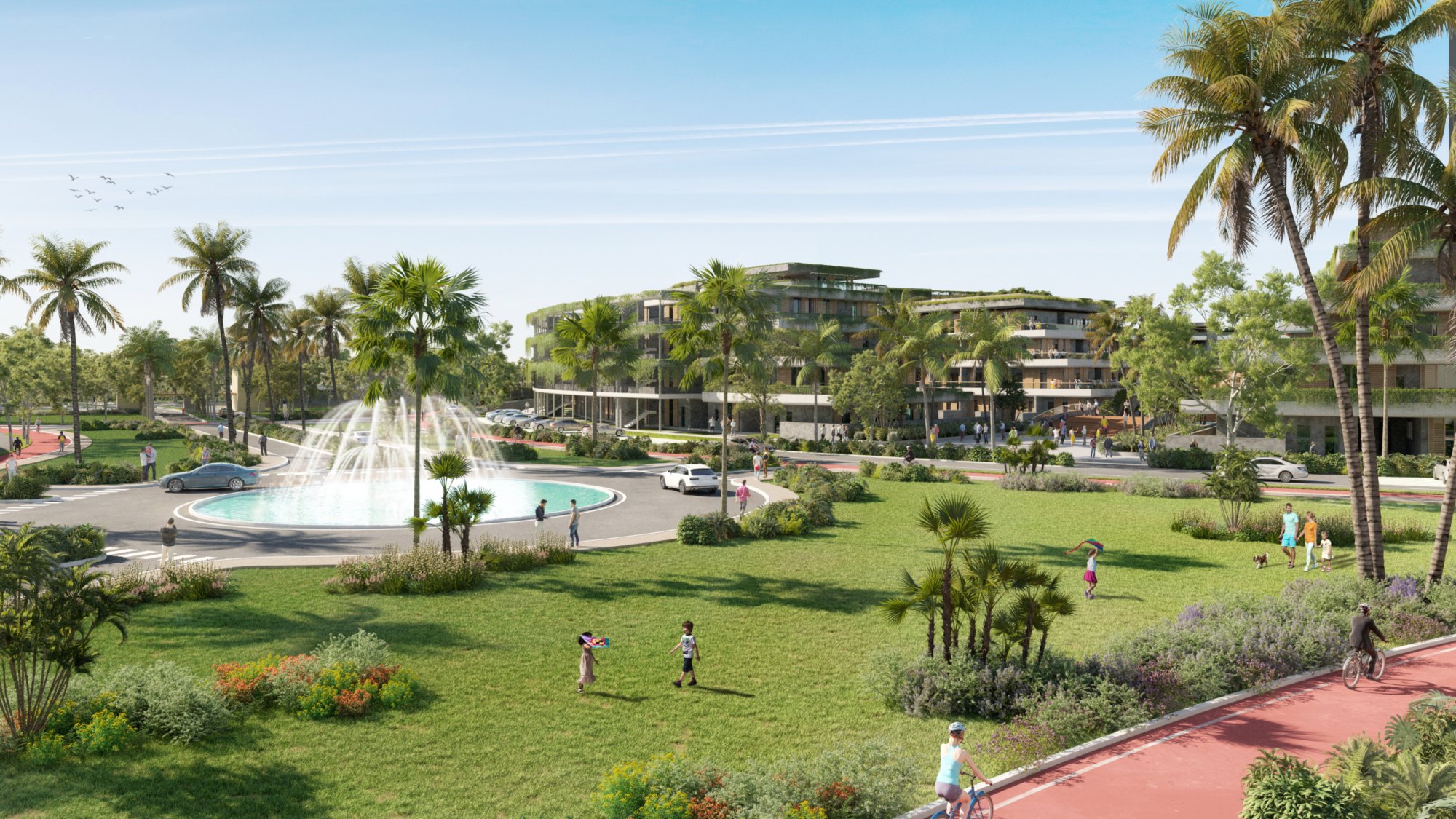
River Island is planned as 692 residences inside Atlántida, with 16 pools and prices from $199,000. For a family, the useful thing about Atlántida is that daily life, from the pools to the park lawns, sits inside the community, so the school run is the one trip that leaves it every weekday. With the main clusters about 5 to 7 miles away, plan on driving and time the route in the morning before you choose.
For owners who visit rather than move, the calendar is the point. The Dominican year ends in mid-June, when northern summer holidays begin, so June and July are when local and visiting children are both out of class. That is when an owner's family is most likely to use the residence, and when it is worth keeping the dates free from rentals.
Common questions
- Are there international schools in Punta Cana?
- Yes. Alongside public and private schools, several schools in the Bávaro and Verón area describe themselves as bilingual or international. Ask each which body accredits it and confirm the answer on that body's own online directory.
- When does the school year start in the Dominican Republic?
- In 2026-2027, public schools started on 24 August 2026 and private schools between 24 and 27 August; the students' year ends on 18 June 2027, with 190 teaching days. Private and international schools may adjust their own dates.
- Is school compulsory in the Dominican Republic?
- The Constitution, in Article 63, declares education compulsory at the initial, basic and secondary levels and guarantees free public education. The organic education law, Ley 66-97, repeats that duty for everyone living in the country.
- How far are schools from River Island?
- Measured by road, the main school clusters are about 5 miles away at the Parque Empresarial Bávaro, about 6 miles in Verón and about 7 miles along the Bulevar Turístico del Este at Friusa, so families should plan to drive.
Want the details for your own situation?
Ask about availability, layouts or the buying process, and someone from the sales team will get back to you.
Get in touch