The Dominican economy, read from a condo in Punta Cana
Anyone buying a residence abroad is buying two things at once: a building, and the economy it stands in. This page describes the second — how large the Dominican economy is, which sectors move it, where foreign capital lands, and which currency an owner actually spends in — using dated outturn figures from the World Bank, the Banco Central de la República Dominicana, the Ministerio de Turismo and the national hotel association, each named in the sentence that uses it. River Island stands in Atlántida, 5 min from Bávaro Beach and 10 min from Punta Cana International Airport, so none of this sits in the background: the visitor economy, the construction cycle and the peso all reach this address.
How large is the Dominican economy, and how fast has it been growing?
Scale first, because the adjectives usually arrive before the numbers. The World Bank's Macro Poverty Outlook for the Dominican Republic, April 2026 edition, records gross domestic product of US$127.4 billion in current dollars for 2025 — about US$11,679 per head — and describes the country as one of the fastest-growing economies in Latin America, averaging 5.2% growth over the two decades to 2025. That is the long run, and it is the context a single year has to be read against.
The single year in question was a quiet one. Real GDP grew 2.1% in calendar 2025, a moderation the Banco Central de la República Dominicana attributes to global uncertainty, financial conditions tighter than expected and policy shifts abroad that pushed private investment to postpone projects. What a headline of that shape conceals is that the sectors did not move together — and the two nearest a property buyer moved in opposite directions.
| Sector | Change in 2025 | What the line is telling a buyer |
|---|---|---|
| Mining | up 4.6% | Gold and related exports were the strong external earner of the year. |
| Agriculture | up 3.7% | Domestic food supply expanded, which feeds through to local prices. |
| Services | up 2.9% | The largest part of the economy, and the part tourism sits inside. |
| Construction | down 1.8% | The weakest line of the year, and the one closest to a pre-construction purchase. |
Tourism is a large slice of this economy — it is not the whole of it
The visitor economy is where a rented residence earns, so it deserves a measured look rather than an enthusiastic one. The Ministerio de Turismo counted 11,676,901 visitors to the Dominican Republic in calendar 2025, the highest annual total it has recorded: 8,861,169 arrived by air and 2,815,732 came ashore from cruise ships. Those two halves are worth keeping apart. A cruise passenger spends a day and needs no bed; the air arrival is the visitor whose trip a condo can actually host.
How much of the country is that? Asonahores, the national hotel and tourism association, put tourism at 8.3% of GDP directly in 2025 and 15.9% once indirect and induced effects are counted — an estimated US$21.62 billion — supporting 882,419 direct, indirect and induced jobs, on its reckoning roughly one job in six. Both halves of that figure are useful. A sector that large explains why roads, airports and power lines get built towards it. A sector that is 8.3% of output rather than half of it explains why a soft season for hotels is not the same event as a national crisis.
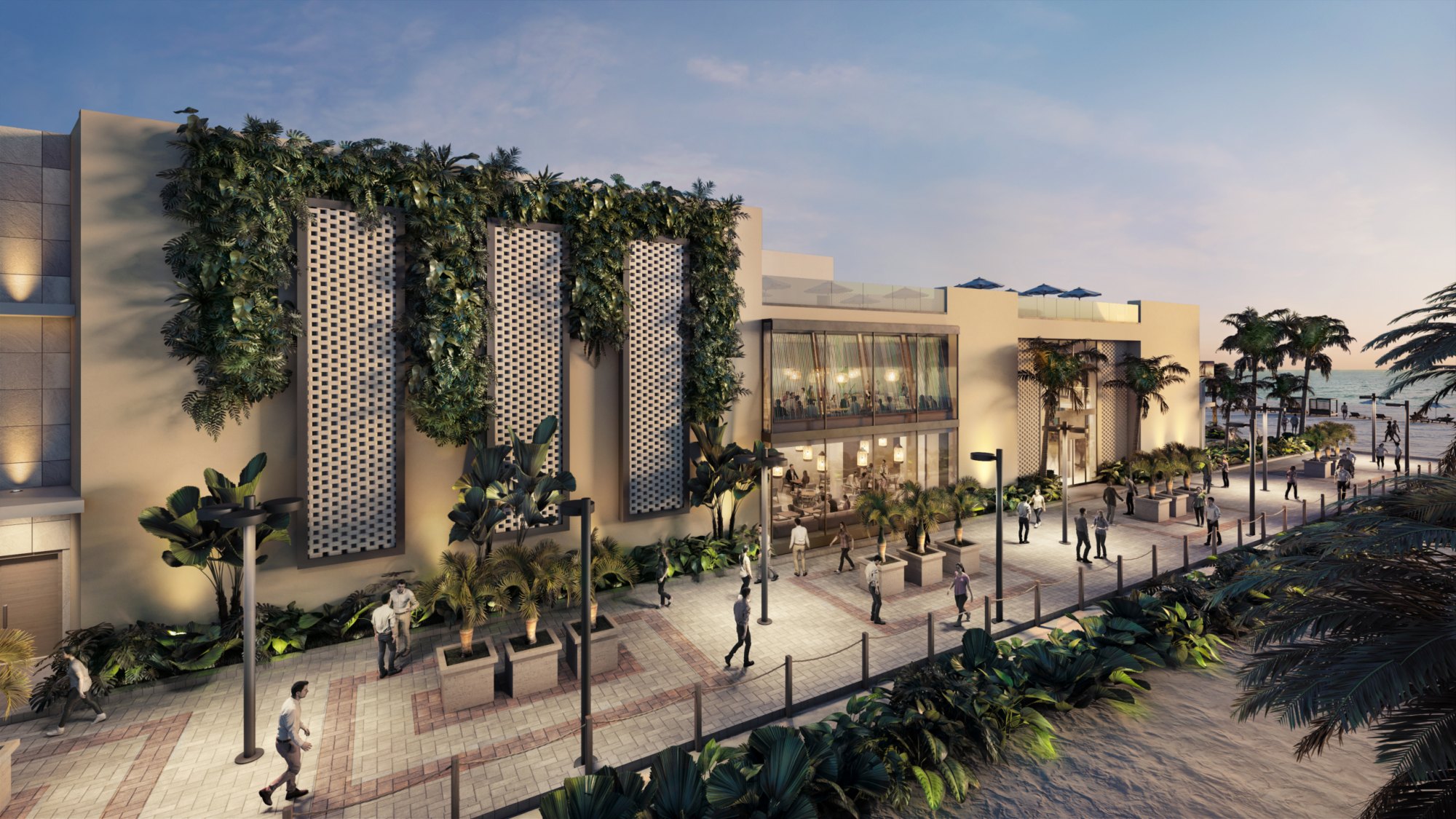
Where foreign capital landed in 2025, and why the state courts it
Investment follows that structure, and it is measured. Foreign direct investment into the Dominican Republic reached US$5.03 billion in calendar 2025 — US$5,032.3 million on the Banco Central's preliminary figures, up 11.3% on the year before and the largest annual inflow recorded. The destination split is the part a property buyer should read twice.
| Destination sector | Share of 2025 inflow |
|---|---|
| Tourism | 26.3% |
| Energy | 23.8% |
| Real estate | 15.7% |
| Commerce and industry | 10.5% |
| Free-trade zones | 8.7% |
| Mining | 6.7% |
Why the tax code points the same way
Between them, tourism at 26.3% and real estate at 15.7% were the largest destinations for that capital. The concentration is not an accident of taste; it is written into statute. Law 158-01, the tourism-promotion law known as CONFOTUR, exempts qualifying tourism projects from the 3% property-transfer tax and from the 1% annual property tax, the IPI — which is itself charged only on the portion of a property's value above an annually adjusted threshold, not on the whole of it.
Three qualifications belong with that, and marketing copy tends to drop all three. The law's exemption period runs for fifteen years and Article 7 ties the clock to completion of construction. The benefit reaches first buyers from the developer and is excluded on resale. And it is not automatic — it has to be filed and recorded against the title before it takes effect. How any of it applies to one specific unit is a question for a Dominican attorney, and it is a fair one to ask before signing anything.
Two currencies: the one you buy in, the one you live in
A foreign owner here deals in two currencies and they do different jobs. River Island prices its residences in United States dollars, from $199,000, so the Dominican peso never touches the figure on a purchase agreement. What the peso governs is everything settled locally afterwards — condominium fees, electricity, a tradesperson on a Tuesday, the weekly shop.
On that side the Banco Central reports an average spot purchase rate of RD$61.52 per US dollar across calendar 2025. It also publishes a reference rate every business day, and that daily figure is the one to check on the day you actually convert money — not a rate quoted on a property page, this one included. On prices, the World Bank's April 2026 outlook records consumer-price inflation averaging 3.9% across 2025, with the December reading at 4.9%, and the Banco Central cutting its policy rate twice, to 5.25%, towards the end of the year. An owner's peso costs were therefore being set by single-digit inflation and by a central bank that was easing rather than tightening as the year closed.
The buffers, and the strains, of a small open economy
A country of this size is judged on whether it can keep paying for its imports and servicing its debt. Both are published. The World Bank's April 2026 outlook records the current-account deficit narrowing to 1.2% of GDP in 2025 — helped by remittances growing 10.3% and by higher merchandise export values — with gross international reserves at US$14.7 billion, or 4.6 months of import cover. Consolidated public-sector debt stood at 57.9% of GDP.
The strains sit in the same document and are better quoted than softened. Transfers covering losses in the electricity sector exceed 1% of GDP, interest payments absorb more than 3% of GDP, and the World Bank names both as restricting the fiscal room available for public investment. There is also a concentration point, and it is the one most relevant to a buyer here: a country this reliant on arrivals is sensitive to whatever interrupts them — a route withdrawn, a regional shock, a season people stay home — and a residence let to visitors carries that same sensitivity. None of this is a prediction. It is the shape of the risk, set out so it can be weighed rather than discovered.
What none of these numbers can tell you about one condo
National aggregates describe a country; they cannot describe a building. The construction line is the cleanest illustration. Value added in construction contracted 1.8% across 2025 — the Banco Central attributes it to an uncertain external environment and relatively high real interest rates that led private developers to postpone works or execute them more gradually — while the same bank's monthly activity index for June 2026, published on 23 July 2026, showed construction expanding 14.9% year on year. One is a full year, the other a single month measured against a weak base, and neither is a statement about any particular site, this one included.
So the boundary is worth stating plainly. The figures here tell a reader what sort of country River Island's 692 condos, 16 interconnected pools and 54,000 sq ft of on-site retail are being built in. They do not say when a given unit is handed over, what it will be worth, or what it will earn; those belong in the developer's own documents, in writing, and are reasonable to request. Every figure on this page carries its period and its publisher for the same reason — the Banco Central publishes preliminary annual results and a monthly activity index, the Ministerio de Turismo publishes arrivals, Asonahores publishes its sector estimates and the World Bank publishes the Macro Poverty Outlook. Read them at the source. A page like this one is a snapshot, and it ages like one.
Common questions
- Does the Dominican Republic depend entirely on tourism?
- No, although tourism is its most visible sector. Asonahores put tourism at 8.3% of Dominican GDP directly in 2025 and 15.9% including indirect and induced effects. The World Bank's April 2026 Macro Poverty Outlook shows mining growing 4.6% that same year, agriculture 3.7% and services 2.9%, and records remittances growing 10.3% — a flow with nothing to do with hotel occupancy. A visitor-facing condo is exposed to the tourism cycle; the country is more diversified than that condo is.
- How much foreign investment went into Dominican tourism and property in 2025?
- Foreign direct investment totalled US$5.03 billion in 2025 — US$5,032.3 million on the Banco Central's preliminary figures, up 11.3% on the year before and the largest inflow recorded. Tourism took 26.3% of it, energy 23.8% and real estate 15.7%. Those are destination shares for a single year's inflow. They are not a forecast of the next year and they say nothing about the performance of any individual project.
- Which currency does an owner at River Island actually spend in?
- Two, doing different jobs. Residences here are priced in United States dollars, from $199,000, so the purchase is a dollar figure from start to finish. Costs after handover — condominium fees, utilities, local trades, groceries — are settled in Dominican pesos. The Banco Central reported an average spot purchase rate of RD$61.52 per US dollar across 2025 and publishes a reference rate every business day; check the current one on the day you convert money rather than any figure printed on a property page.
- Is Dominican public debt something a foreign owner should worry about?
- It is something to know rather than to guess at, and the numbers are public. The World Bank's April 2026 Macro Poverty Outlook puts consolidated public-sector debt at 57.9% of GDP in 2025, with electricity-sector transfers above 1% of GDP and interest payments above 3% of GDP restricting fiscal room — set against gross international reserves of US$14.7 billion, or 4.6 months of imports, and a current-account deficit that narrowed to 1.2% of GDP. We publish no view on where any of those go next. The World Bank and the Banco Central republish them, and that is where to look.
- Do these national figures tell me when River Island will be delivered?
- No, and it is worth being blunt about that. Construction value added fell 1.8% nationally in 2025, and the Banco Central's activity index for June 2026 showed the same sector expanding 14.9% year on year — a national aggregate in both directions, one measured over a year and one over a month. Neither describes a particular site. The schedule for a specific unit belongs in the developer's own documents, and requesting it in writing is the right step.
Want the details for your own situation?
Ask about availability, layouts or the buying process, and someone from the sales team will get back to you.
Get in touch