How Property Management Works for an Owner at River Island
As an owner of a condo at River Island, you have two primary paths for property management: you can manage the property yourself, or you can hire a professional service, which can include the optional in-house rental program. The choice depends on your goals, your location, and how hands-on you wish to be with your investment.
What Are My Management Choices as an Owner?
Owning a property in Punta Cana from abroad presents a core decision: how will it be managed? At River Island, your ownership is flexible, and you are not required to rent out your unit. If you do, you have complete control over the management approach.
1. Self-Management: In this model, you are in direct control. You handle everything from listing your property on platforms like Airbnb or VRBO, communicating with guests, and setting prices to arranging for cleaning and maintenance. This approach offers maximum control over your revenue and operations but requires significant time and attention.
2. Professional Property Management: You can hire a third-party property management company in Punta Cana. These firms typically handle all operational aspects of renting your property in exchange for a fee or a percentage of the rental income. Their services and fees vary, so due diligence is important.
3. The Optional In-House Rental Program: River Island offers owners the choice to join a managed rental program. This is designed to be a hands-off solution for investors, with projections of 12–15% annual ROI. Participation is entirely optional. The specific terms, fees, and services included are defined by the program's formal agreement, which you should review carefully.
How Does River Island's Location Impact Management?
Your condo's location within the Atlántida master-planned community provides distinct advantages for both self-managed owners and professional managers. These are not just amenities for you, but key selling points for attracting rental guests.
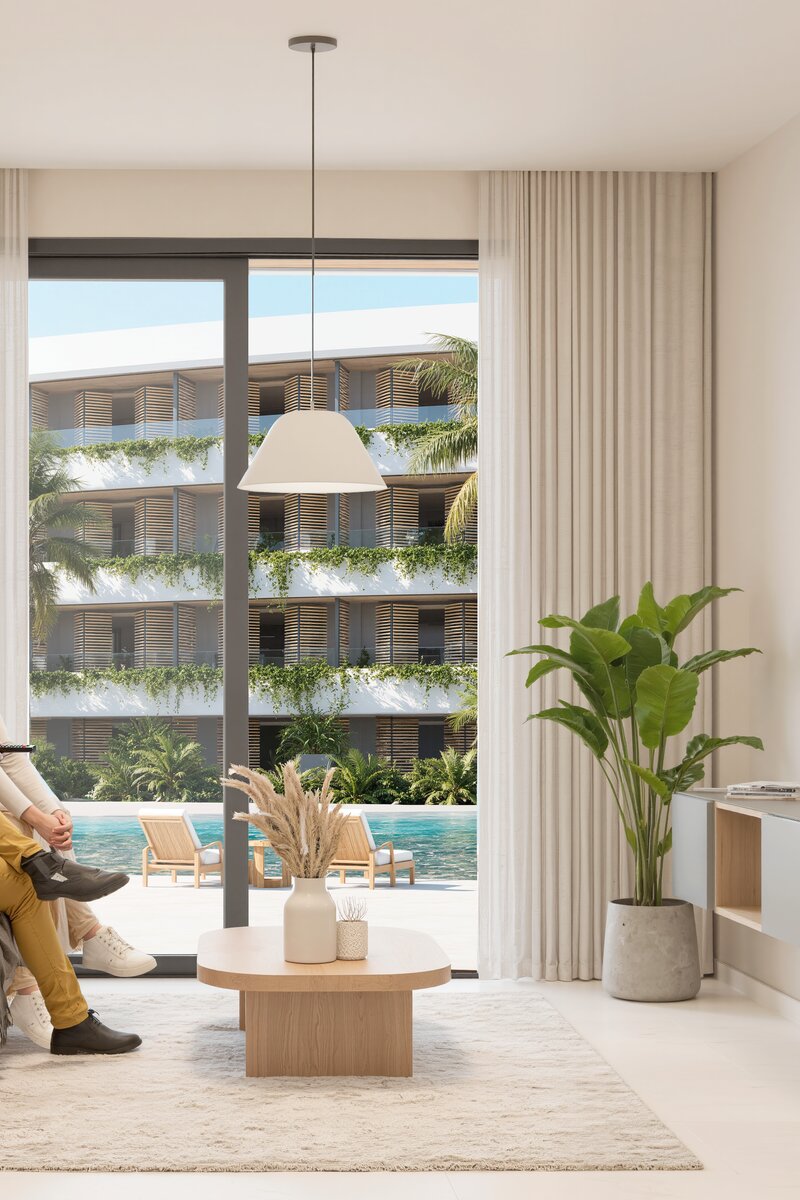
The community is designed to be a self-contained destination. With 16 interconnected pools, a signature river pool, and lush gardens, the property itself is a major draw, reducing the need for guests to travel off-site for leisure. For managers, this simplifies the 'product' they are marketing.
Furthermore, the on-site 54,000 sq ft shopping center means that supplies, services, and dining are within walking distance. This is a significant convenience for guests and can simplify logistics for cleaning and maintenance crews. Proximity to key destinations like Bávaro Beach (a 5 min drive) and the Punta Cana International Airport also makes your unit highly attractive and easy to access for international travelers, a key demographic for Punta Cana rentals.
What Are the Key Tax Rules for Rental Income?
Understanding the tax obligations on rental income is critical for any non-resident owner in the Dominican Republic. These rules are separate from the property tax benefits provided by CONFOTUR.
Firstly, it's important to be clear about what is on the record. The CONFOTUR law provides exemptions for the 3% transfer tax and the 1% annual property tax (IPI) on qualifying projects, which are real savings on acquiring and holding the asset. Rental earnings are assessed under a separate part of the Dominican tax code. No source we hold rules on how the two meet for a particular unit and owner, so put that question to your attorney rather than assuming an answer in either direction.
For non-resident owners, rental income is subject to a 27% withholding tax. This tax is applied to the gross rental income, with no deductions for expenses like management fees, maintenance, or utilities. This is a definitive, single payment on your Dominican-sourced income.
Additionally, short-term tourist rentals are subject to an 18% ITBIS tax (the Dominican value-added tax). Under current law, the responsibility for collecting and remitting this tax falls on the property owner or host, not necessarily the booking platform. Your attorney or accountant can provide guidance on the correct procedure for registration and payment.
Rates change, so confirm the current figures before relying on them.
| Tax Type | Rate | Basis |
|---|---|---|
| Non-Resident Withholding | 27% | Gross rental income, no deductions |
| ITBIS (VAT) | 18% | Short-term tourist stays only |
| Property Tax (IPI) with CONFOTUR | Exempt | Property value above the exempt threshold; rental earnings assessed separately |
What Steps Are Involved in Making My Condo Rental-Ready?
Preparing your River Island condo for the rental market involves a clear sequence of steps. While our units are delivered to make this process smooth, there are still key decisions and actions for you as the owner.
-
Confirm Furnishings and Inventory Your River Island condo is delivered fully furnished and rental-ready. The first step is to conduct a final walkthrough and create an inventory. Decide if you need to add any small items like extra linens, kitchenware, or specific decor to match your target rental market.
-
Establish Legal and Tax Structure Before earning any income, consult with a Dominican attorney and accountant. They will advise on whether to hold the property in your personal name or a corporate structure, and will ensure you are properly registered with the DGII (the Dominican tax authority) to handle ITBIS and income tax.
-
Choose Your Management Path Decide whether you will self-manage, hire a local property manager, or opt into the in-house rental program. This choice will determine your next steps regarding marketing, guest services, and operations.
-
Create Your Property Listing If self-managing or using a manager who doesn't handle marketing, you'll need to create compelling listings on major rental platforms. This includes professional photography, writing descriptive text that highlights the unit and River Island's unique amenities like the 16 pools, and setting your initial pricing and availability.
-
Set Up Operations Arrange for a reliable cleaning team, a handyman for maintenance issues, and a system for key exchange or smart lock access for guests. If using a professional manager, they will handle all of these logistics.
Common questions
- Do I have to use the in-house rental program at River Island?
- No, participation in the rental program is completely optional. As the owner, you have the freedom to manage the property yourself, hire an outside property manager, or not rent it out at all.
- Who is responsible for paying taxes on my rental income?
- As the property owner, you are ultimately responsible for ensuring all Dominican taxes on your rental income are paid correctly. This includes the 27% non-resident withholding tax and the 18% ITBIS on short-term stays. A professional manager or accountant can handle the filings, but the legal liability rests with the owner.
- Can I rent my property for long-term stays instead of short-term?
- Yes, you can. The tax treatment differs, as residential housing for permanent habitation is typically exempt from the 18% ITBIS tax that applies to short-term tourist accommodation. However, the 27% income tax withholding for non-residents would still apply to the gross rental income.
Want the details for your own situation?
Ask about availability, layouts or the buying process, and someone from the sales team will get back to you.
Get in touch