A Guide to Renting Your River Island Condo on Vrbo & Airbnb
Yes, owners at River Island can list their condos on short-term rental platforms like Vrbo and Airbnb. You have the flexibility to either manage the property yourself or use the optional in-house rental program. This guide outlines the legal framework for short-term rentals, the tax obligations for non-resident owners, and the specific features of River Island that make it a compelling choice for a vacation rental investment in Punta Cana.
Is it legal to rent out my River Island condo on a short-term basis?
Yes, short-term rentals are legally permitted in the Dominican Republic. National laws allow for tourist accommodations, which includes properties listed on platforms like Vrbo and Airbnb. This legal framework makes it possible for you to operate your condo as a vacation rental.
However, the ultimate authority for any condominium is its own set of bylaws. At River Island, the community is designed with the flexibility for owners to either live in their unit or rent it out. This means the structure and rules are established to accommodate owners who wish to generate rental income, providing a clear path for your investment.
What are my options for managing my rental property?
As an owner at River Island, you have two primary routes for managing your rental property. Each offers a different level of involvement and control.
1. Self-Management: You can choose to manage the rental yourself. This involves handling all aspects of the process, including creating and managing your listings on Vrbo or Airbnb, communicating with guests, coordinating check-ins and cleanings, and managing maintenance. This option gives you complete control over your pricing, availability, and guest interactions.
2. Optional In-House Rental Program: River Island offers an optional, hands-off rental management program. Owners who enroll in this program can have their property managed for them. For details on what this program includes, its fees, and its terms of service, you should request the official documentation from the developer. This allows you to make an informed decision based on the specific services provided.
How is rental income taxed for non-resident owners?
When you earn rental income from a property in the Dominican Republic as a non-resident, two main taxes apply. It's important to understand these, as they are distinct from the property tax benefits offered by CONFOTUR.
The tax system for short-term tourist rentals is structured as follows. Your attorney or a qualified local accountant can provide guidance on compliance and filing.
The 27% withholding is charged on the gross, with no deductions for costs, and rates change — confirm the current figure before relying on it.
| Tax | Rate | Basis | Key Consideration for Owners |
|---|---|---|---|
| ITBIS (VAT) | 18% | Gross Rental Income | This tax applies to short-term tourist lodging. The property owner (host) is liable for collecting and remitting it, not the booking platform. |
| Withholding Tax | 27% | Gross Rental Income | This is a final tax for non-residents. It is calculated on the gross income without any deductions for expenses like maintenance or management fees. |
How do River Island's features attract rental guests?
River Island is not just a collection of condos; it's a destination within the larger Atlántida community, offering a unique set of amenities that stand out on rental platforms. When a guest is scrolling through listings on Vrbo, these are the features that make a River Island property a premium choice.
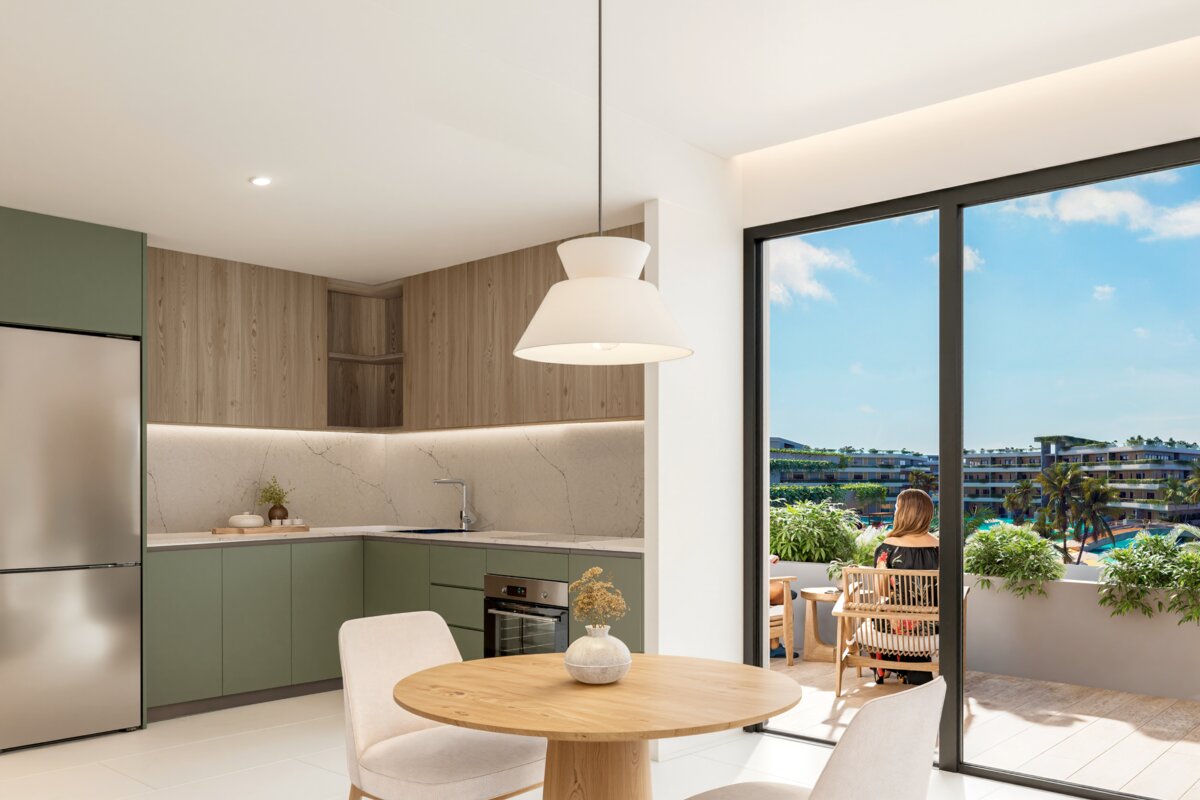
The sheer scale of the water features is a primary draw. With 16 interconnected pools winding through tropical gardens, the visual appeal is immediate. This isn't a simple community pool; it's an experience that defines the property. Furthermore, every one of the 692 units is delivered fully furnished and turnkey, meaning your property is ready to be photographed and listed from day one, without the logistical challenge of furnishing a home from abroad.
Location is also key. The property is just a 5-minute drive from the iconic Bávaro Beach and only 10 minutes from Punta Cana International Airport, a major convenience for international travelers. This combination of resort-style living and practical accessibility makes it an easy choice for vacationers.
How does CONFOTUR relate to the tax on my rental income?
This is a common question, and the distinction matters for financial planning: the exemptions CONFOTUR is documented to grant are property taxes, and rental income is taxed separately under its own rules.
The CONFOTUR law (Law 158-01) is documented as providing tax advantages attached to the property itself — what you pay to acquire it and to hold it. As River Island is a CONFOTUR-approved project, first-time buyers benefit from two key exemptions:
- An exemption from the 3% Transfer Tax on the purchase.
- An exemption from the 1% annual property tax (IPI). The law provides this exemption for qualifying projects for a period of fifteen years. This tax is normally levied on the value of a property above an annually adjusted threshold.
These exemptions lower what you pay to acquire and to hold the property. The 27% withholding tax and the 18% ITBIS described above sit in the separate regime that applies to rental earnings, and no source we hold rules on how the two regimes meet. Understanding this distinction is crucial for accurately projecting your net rental income. Whether any of it changes for your particular unit and circumstances is a question for your attorney, who can also confirm how these laws apply to your specific purchase.
Common questions
- Do I have to use the in-house rental program at River Island?
- No, the rental program is completely optional. Owners have the freedom to manage their property themselves, list it on any platform they choose, use it personally, or leave it vacant. The choice is entirely yours.
- What does 'turnkey' mean for my rental property?
- Turnkey means your condo is delivered fully furnished and ready for immediate occupancy. This includes the complete interior design package with furniture, lighting, and kitchen finishes. This allows you to start renting it out—or enjoying it yourself—from the moment you receive the keys, without the need for additional setup.
- Who is responsible for paying the taxes on rental income?
- As the property owner and host, you are responsible for ensuring that both the 18% ITBIS (VAT) and the 27% non-resident withholding tax are paid to the Dominican tax authorities (DGII). Booking platforms like Vrbo and Airbnb do not handle this for you. It is recommended to work with a local accountant to manage these obligations correctly.
Want the details for your own situation?
Ask about availability, layouts or the buying process, and someone from the sales team will get back to you.
Get in touch