Las Terrenas or the Punta Cana coast: own on one, visit the other
Las Terrenas, a small beach town on the Atlantic coast of the Samaná peninsula, and the Punta Cana coast where River Island stands are two different answers to the same purchase, roughly 185 miles apart by road because Samaná Bay lies between them. Las Terrenas offers a walkable town, green hills and the winter whales; the Punta Cana side offers the airport through which about seven in ten foreign air visitors arrived in 2025, half the rain, and hotels that stayed fuller all year. This page sets the two side by side on what decides a purchase, and explains what a trip from River Island to Samaná and Los Haitises involves.
How far is Las Terrenas from River Island?
Las Terrenas is one of the three municipalities of Samaná province, on the Samaná peninsula, with the Atlantic Ocean along its northern edge. River Island is in Atlántida, in the Bávaro area of the east coast. On a map the two look close, about 86 miles apart in a straight line from River Island’s published coordinates. On the ground they are not, because no road crosses Samaná Bay and every drive has to swing round its western end.
We measured the route on a public routing engine that uses OpenStreetMap road data: roughly 185 miles, west along the coast past La Romana, across the eastern edge of Santo Domingo, north on the Autopista del Nordeste and into town on the Boulevard Turístico del Atlántico, the last two both toll roads. We leave out the engine’s own time, because it assumes empty roads and no stops. A route planner and a traveller’s account of the run from the Punta Cana area to the peninsula both land at roughly four and a half hours at the wheel, so from here Las Terrenas is a destination for a few nights, never an afternoon out.
Which airport would you fly into?
For an owner who lives abroad, the airport shapes the purchase more than the beach does. It decides how often you can come, how easily family and guests can reach you, and how much of every visit goes on the journey. The Banco Central’s arrival figures for 2025 make the contrast plain. Punta Cana International received 5,275,492 foreign visitors arriving by air, about seven in ten of the country’s total, and it is a 10-minute drive from River Island. El Catey, the airport on the Samaná peninsula, received 48,799, and it lies roughly 15 miles from Las Terrenas by road.
El Catey is also a winter airport. It opened in November 2006, and its small schedule is built mostly around routes from Canada, plus a service to Paris; in 2025 it handled 7,950 foreign arrivals in December and 1,229 in September. Outside the winter season, the practical gateways for Las Terrenas are Las Américas, outside Santo Domingo, roughly 85 miles away by road, or Punta Cana itself, roughly 180. None of this is a flaw in the town. It is the price of a quieter location, and an owner pays it on every trip.
| Airport | Foreign arrivals, 2025 | By road to Las Terrenas | By road to River Island |
|---|---|---|---|
| Punta Cana International (PUJ) | 5,275,492 | Roughly 180 miles | A 10-minute drive |
| Las Américas, Santo Domingo (SDQ) | 1,208,809 | Roughly 85 miles | Roughly 110 miles |
| El Catey, Samaná (AZS) | 48,799 | Roughly 15 miles | Roughly 175 miles |
What is Las Terrenas like, compared with the Punta Cana coast?
Las Terrenas is a town in its own right, and that is most of its appeal. It grew from a small fishing village settled in 1946; foreigners started arriving in the 1970s, the French first and then Germans, Italians, Swiss and others, and the municipality’s development plan for 2023–2028 still describes foreign residents who have made their homes there and a significant presence of foreign investment. The municipality counted 25,696 residents at the 2022 census. The same plan names tourism, commerce and fishing as the base of the local economy, with the tourist offer concentrated on sun and beach. Its streets are open rather than gated, and green hills rise behind the shore. That greenery has a cause: about 86 inches of rain a year at the Samaná weather station, against about 42 at Punta Cana, on ONAMET’s station averages for 1971–2000.
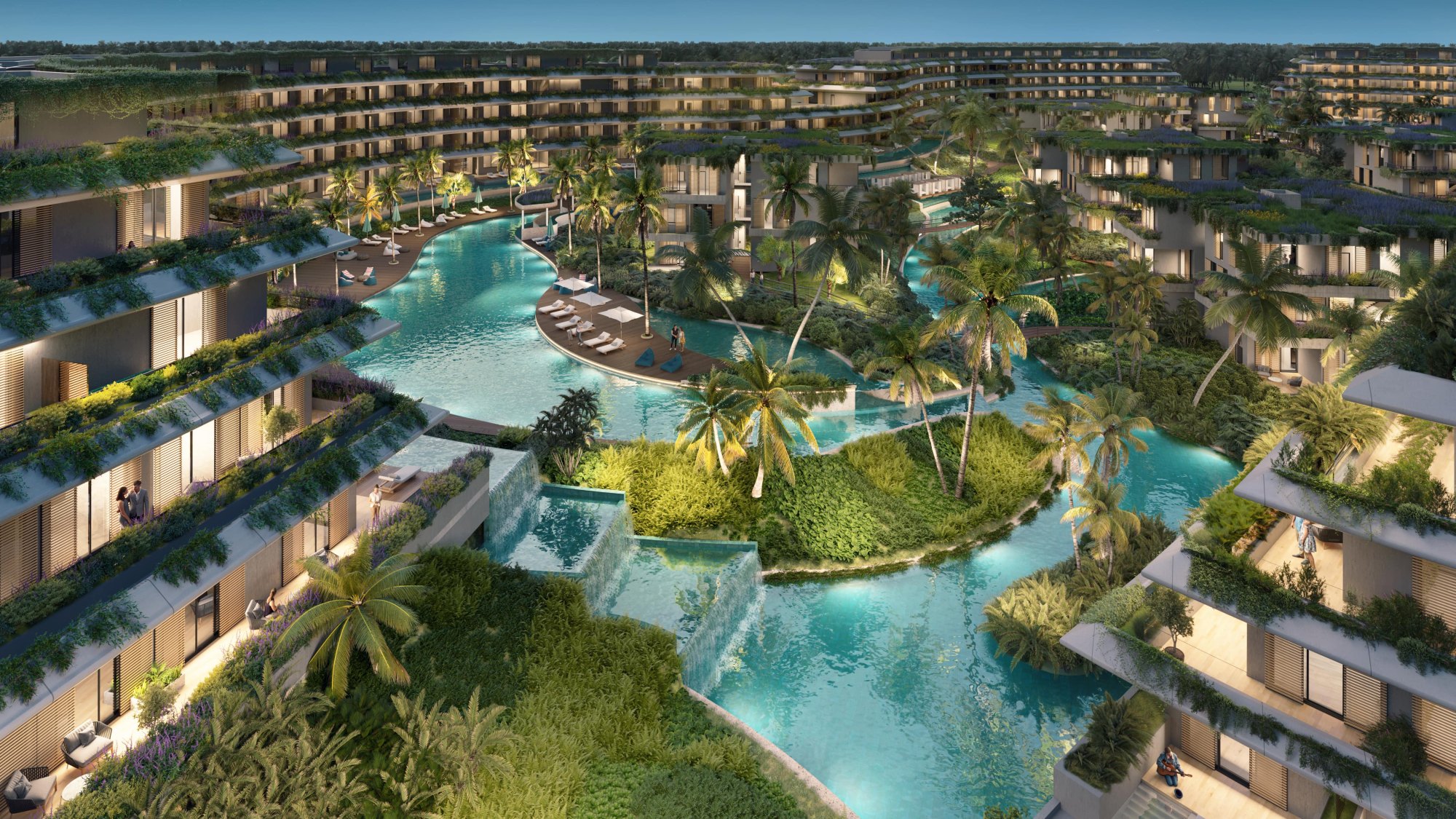
The Punta Cana side works on another scale. The Verón–Punta Cana municipal district, which takes in Bávaro, counted 138,919 residents in the same census, and its visitors arrive through an airport rather than over a hill road. River Island sits inside the gated Atlántida community: 692 residences threaded with 16 interconnected pools, and beach-club access at Playa Bávaro, a 5-minute drive away. Neither model is better in the abstract. One is a small town you settle into; the other is a planned community on the coast where most foreign visitors land.
How full does each coast’s visitor season run?
If you plan to let the home when you are not using it, the shape of each coast’s visitor year matters as much as its scenery. The cleanest public measure is hotel occupancy by zone, compiled by the national hotel association and republished by the Banco Central. In 2025 hotel rooms in the Samaná zone were on average 57.1% occupied, against 81.6% in the Punta Cana/Bávaro zone. Samaná peaked in February at 72.1%, in the middle of the whale season, and bottomed out in October at 44.1%; on the Punta Cana side, the quietest month, September, still ran at 62.2%, and the zone led Samaná in every month of the year.
Read these figures for what they are. They count hotel rooms, not condominiums or holiday homes, for a single year, so they forecast nobody’s rental income and we derive no yield from them. What they do show is where demand sits: Samaná’s visitor year leans on a few late-winter weeks, while the east coast’s holds up across the calendar. If you will mostly use the home yourself in February, that difference costs you little. If you are counting on guests in June or October, it decides a lot.
| Las Terrenas and Samaná | Bávaro and Punta Cana | |
|---|---|---|
| Residents, 2022 census | 25,696 (Las Terrenas municipality) | 138,919 (Verón–Punta Cana district) |
| Rain, 1971–2000 station averages | About 86 inches a year (Samaná) | About 42 inches a year (Punta Cana) |
| Hotel occupancy, 2025 average | 57.1% | 81.6% |
| Busiest hotel month, 2025 | February, 72.1% | February, 92.2% |
| Quietest hotel month, 2025 | October, 44.1% | September, 62.2% |
What does a trip to Samaná from River Island involve?
Give it at least a couple of nights and choose the route by what you want to see. The simple way to Las Terrenas is all the way round by road, the roughly 185 miles described above, driven in daylight. Canada’s travel advice for the country warns that criminals target cars on the roads, especially after nightfall, and advises travelling in daylight; it describes major highways as generally in good condition and rural roads as not well maintained.
The shorter road runs north through Miches to Sabana de la Mar, on the south shore of Samaná Bay, roughly 80 miles from River Island. From its dock a ferry crosses to Samaná town in roughly an hour; the booking listings we read sell an individual ticket and none mentions cars, so plan the far side by taxi or with a car hired there. Las Terrenas is roughly 22 miles of hill road beyond Samaná town.
Sabana de la Mar is also the doorway to Los Haitises National Park, created by law in 1976, whose name means high or mountainous land in the Taíno language: steep, forested limestone hills, caves and mangrove channels across the bay from the peninsula. The park’s administration office is in Sabana de la Mar; operators carry visitors by boat into its public-use zone, from the Caño Hondo cove and San Lorenzo Bay to caves such as La Arena, where a petroglyph can be seen; and the environment ministry says every visit must be authorised in advance. Of the places on this page, this corner is the closest to a Punta Cana home by road.
If whales are the reason for going, aim for late winter. The environment ministry set the 2025 humpback whale-watching season in Samaná Bay at 15 January to 31 March, and it reported 61,558 registered whale-watching visitors in the first quarter of 2024, 40,667 of them from abroad. Canada’s advice also warns that the tourism industry is not well regulated and that tour operators may not meet Canadian safety standards, so before paying for any boat trip, ask to see the boat’s environmental authorisation from the ministry.
So which coast should you own on?
Start from how you will actually use the place. If the draw is a walkable town with a cosmopolitan, partly European community, green hills behind the beach and whales in the bay, and you will mostly come yourself in late winter, Las Terrenas may well be the right purchase, and River Island cannot give you that. If you expect to fly in often, at short notice or out of season, or to let the home to guests through the year, the figures above point the other way: the airport most foreign visitors use is ten minutes from the gate, the rainfall is about half, and Punta Cana/Bávaro hotels ran fuller than Samaná’s in every month of 2025.
River Island is one option on that side of the country, not the only one: 692 residences inside gated Atlántida, from $199,000 USD, with 16 interconnected pools, beach-club access at Playa Bávaro five minutes away and Punta Cana International ten minutes away. Some things do not change with the coast. The Atlantic hurricane season, from June 1 to November 30, covers the whole country; the shoreline strip is public property by law on both coasts; and Samaná stays within reach for a long weekend, whichever side you choose to own on.
Common questions
- Is River Island in Las Terrenas or Samaná?
- No. River Island is in Atlántida, in the Bávaro area of the Punta Cana coast, in La Altagracia province. Las Terrenas is on the Samaná peninsula in the north-east, about 86 miles away in a straight line and roughly 185 miles by road, because the route has to go round Samaná Bay.
- Which airport serves Las Terrenas, and how busy is it?
- El Catey (AZS), roughly 15 miles from town by road. It received 48,799 foreign air arrivals in 2025, mostly in the winter months, against 5,275,492 at Punta Cana International, a 10-minute drive from River Island. Outside winter, the practical alternative is Las Américas near Santo Domingo, roughly 85 miles away by road.
- Do Samaná’s hotels fill up the way Punta Cana’s do?
- Not on the 2025 figures the Banco Central republishes: Samaná-zone hotels averaged 57.1% occupancy against 81.6% in Punta Cana/Bávaro, and Samaná’s best month, February, reached 72.1%. These are hotel rooms, not homes, and one year only; they predict no rental income.
- Can you visit Los Haitises from Punta Cana without going round Samaná Bay?
- Yes. Boats into Los Haitises National Park leave from Sabana de la Mar, on the bay’s south shore, roughly 80 miles from River Island by road through Miches. The environment ministry says every visit must be authorised in advance, so book with an operator that holds the authorisation.
- When is the best time to visit Las Terrenas from Punta Cana?
- Late winter, if the whales are the reason: the environment ministry set the 2025 whale-watching season in Samaná Bay at 15 January to 31 March, and February was the Samaná zone’s busiest hotel month that year. Allow several nights, drive in daylight and expect more rain than in Punta Cana: about 86 inches a year at the Samaná station against about 42, on 1971–2000 station averages.
Want the details for your own situation?
Ask about availability, layouts or the buying process, and someone from the sales team will get back to you.
Get in touch